
French Alps Photography: Peaks, Water and Changing Light

Snow-covered ridges rise above cloud. Further down, sunlight filters through trees onto moving water, while paths cross slopes of grass and broken rock.
This selection from my French Alps photography archive moves between those different scales. Broad mountain views establish the landscape; closer photographs reveal its surfaces, movement and changing atmosphere.
Reading the mountain landscape
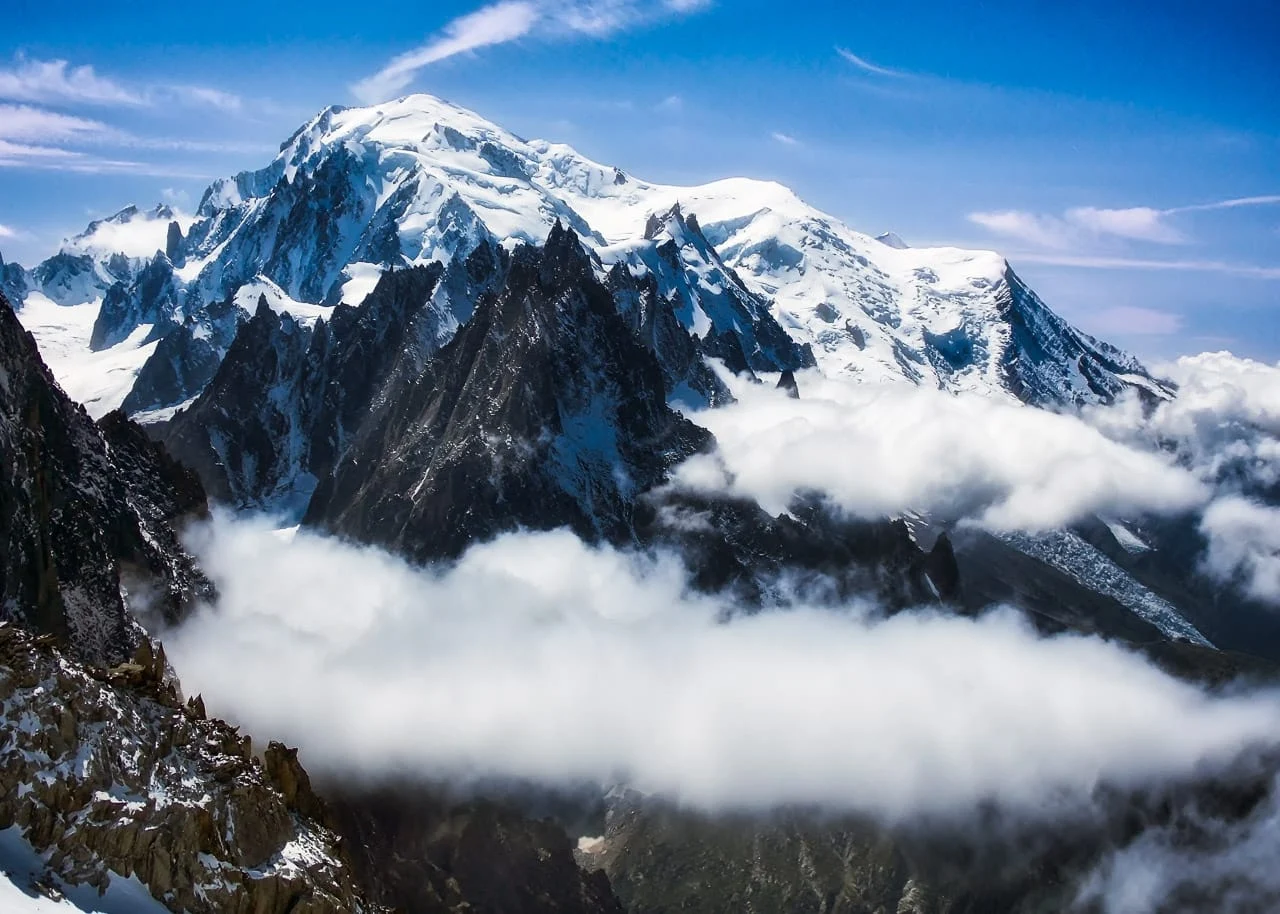
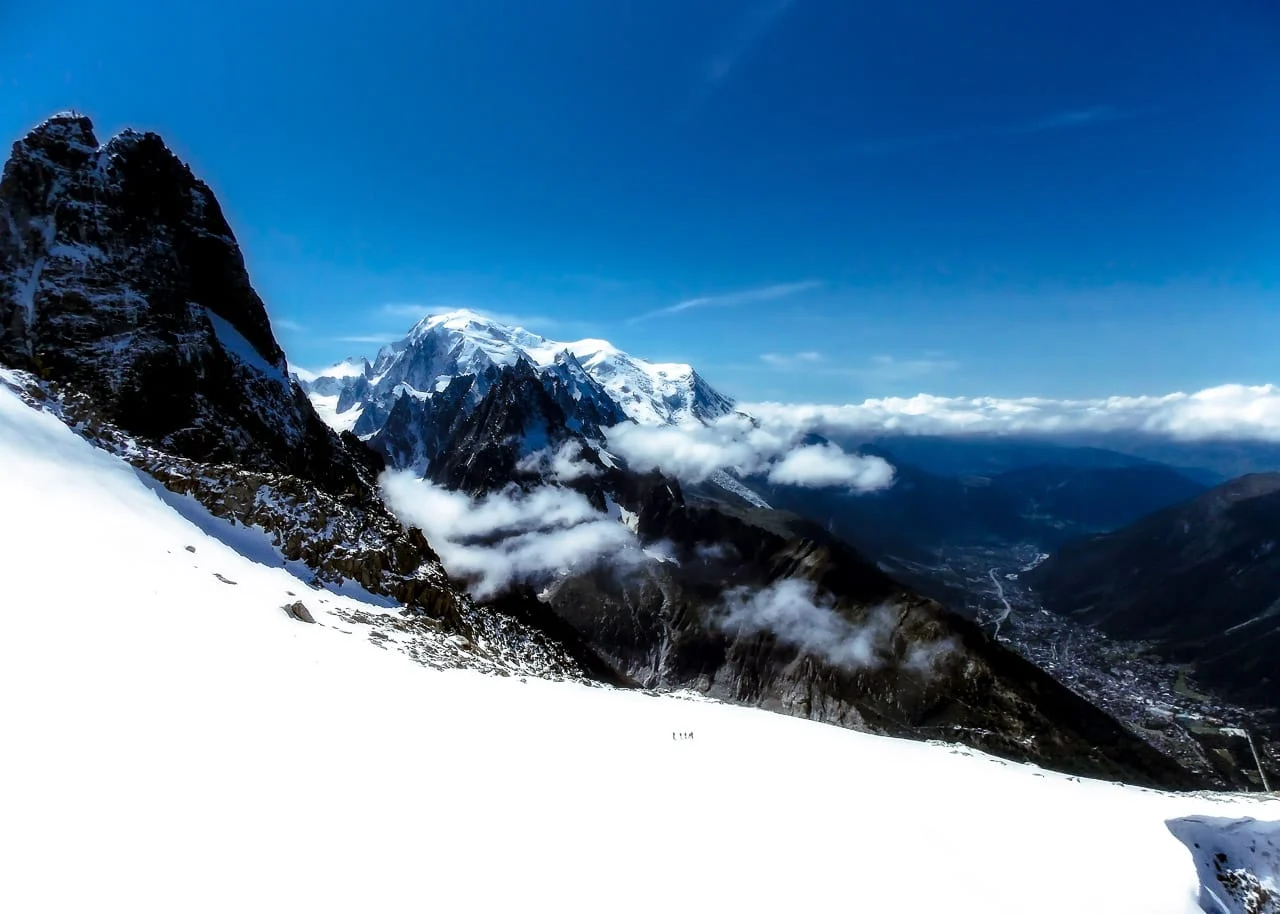
In the high mountain photographs, snow and exposed rock describe the shape of the terrain. Bright slopes meet dark faces, making ridges and gullies easier to distinguish. Bands of cloud separate the foreground from the mountains beyond.
The wider view introduces another relationship: a steep, snow-covered foreground opens towards a distant valley. Keeping both within the frame gives the photograph a sense of depth that a closer view of the summit alone would not provide.
A mountain photograph needs more than an impressive subject. The position of the foreground, the space around a ridge and the balance between sky and land all influence how clearly the scene can be read.
Light across rock and snow
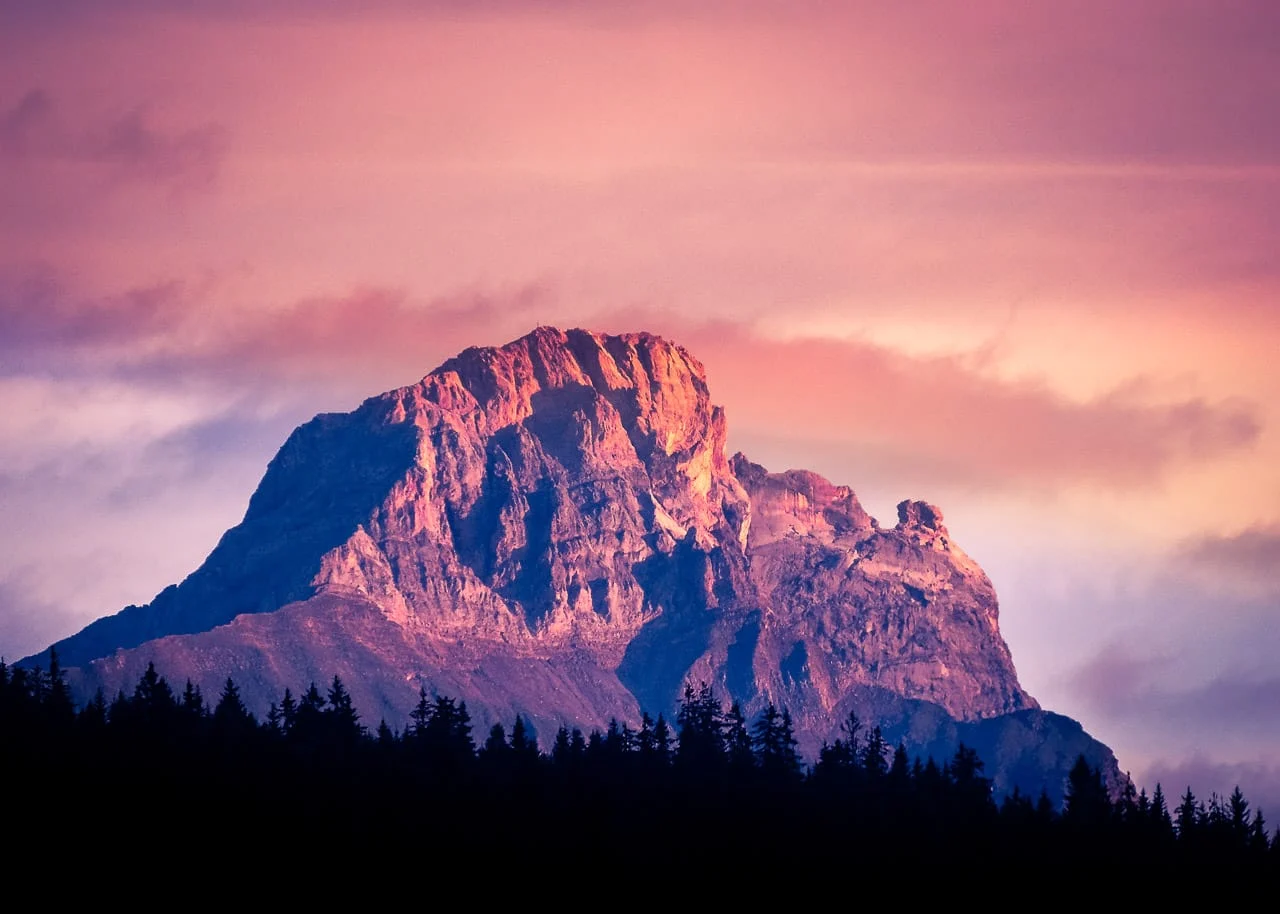
The warmer mountain photographs change the emphasis. Light catches the rock faces while the trees below remain in silhouette. The dark woodland provides a simple base, allowing the illuminated mountain to hold attention.
Colour also changes the relationship between the surfaces. Warm rock stands apart from cooler shadow, while pale snow remains distinct against the surrounding stone.
There is no single light that suits every mountain view. Clear daylight can reveal the structure of a ridge; lower light can draw attention to one face while leaving another in shade. The useful question is what the light makes visible.
Following the water
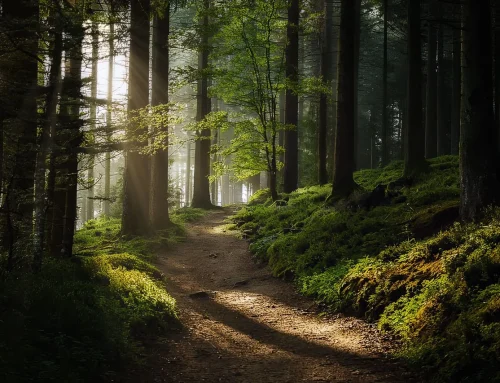
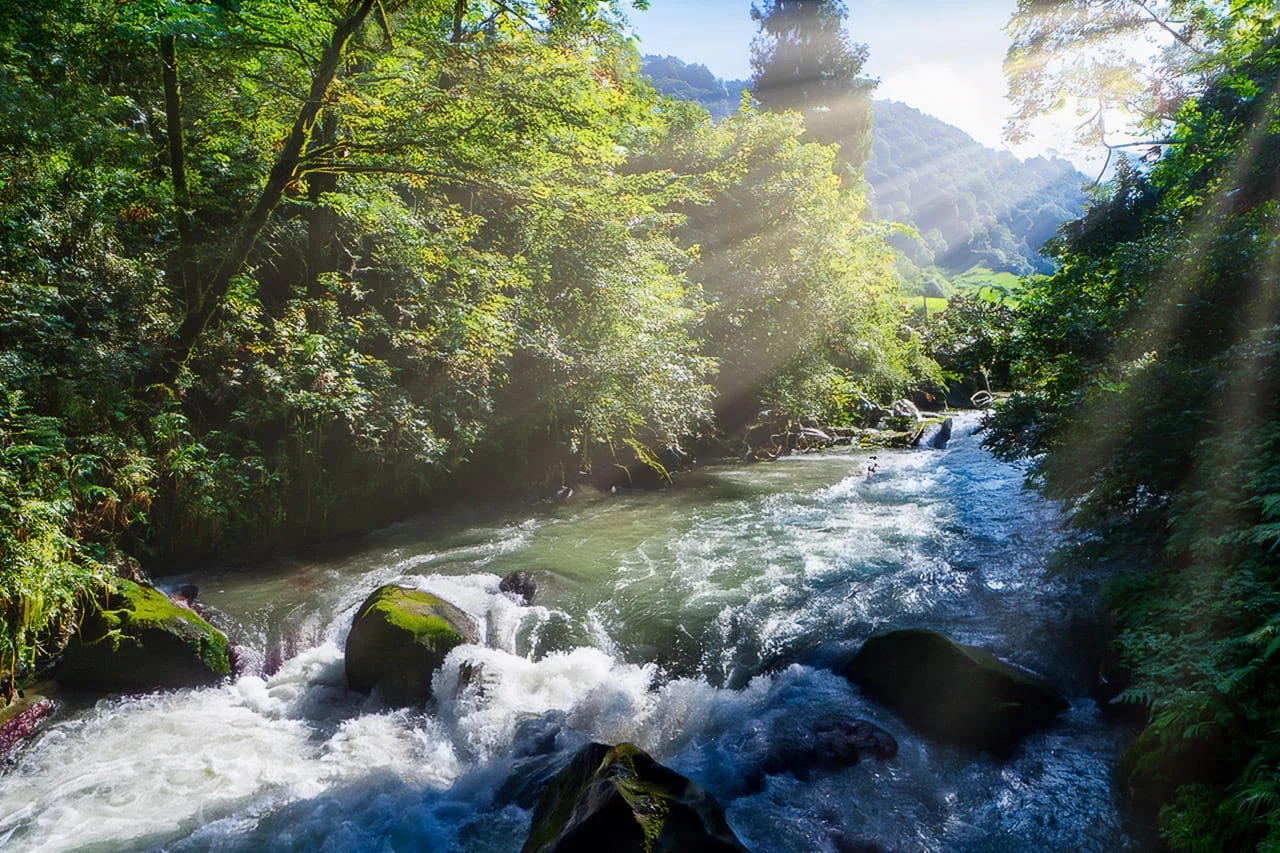
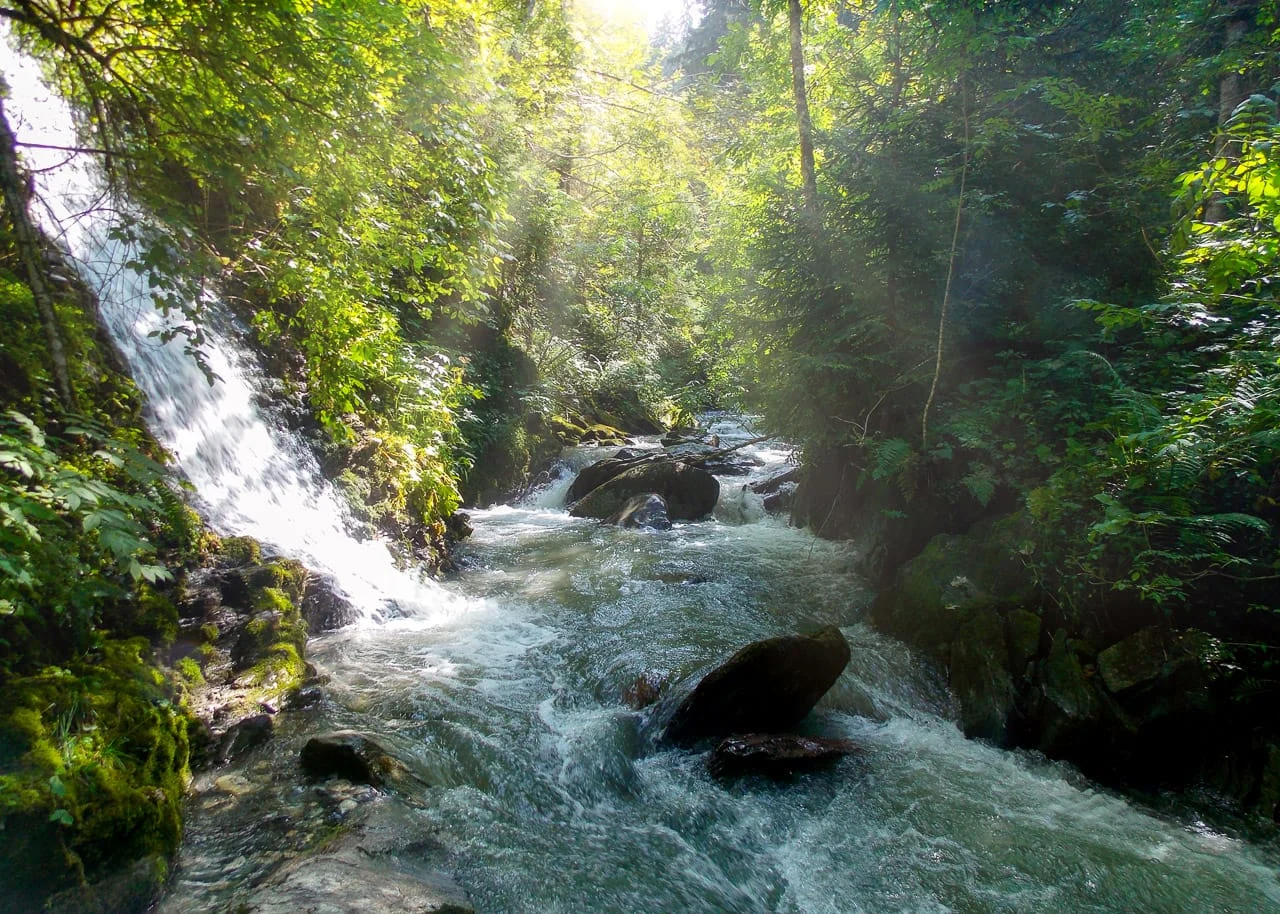
The woodland photographs bring the view closer. Water moves around boulders and beneath branches, replacing the long outlines of the mountains with a more intricate arrangement.
In one frame, sunlight passes through the canopy and catches the river. In another, a waterfall enters from the side, drawing the eye towards the main flow. Moss, leaves and dark stone give the bright water a contrasting setting.
These smaller scenes provide a pause between the open mountain views. They show another part of the landscape through texture and movement rather than distance.
Paths and a sense of scale
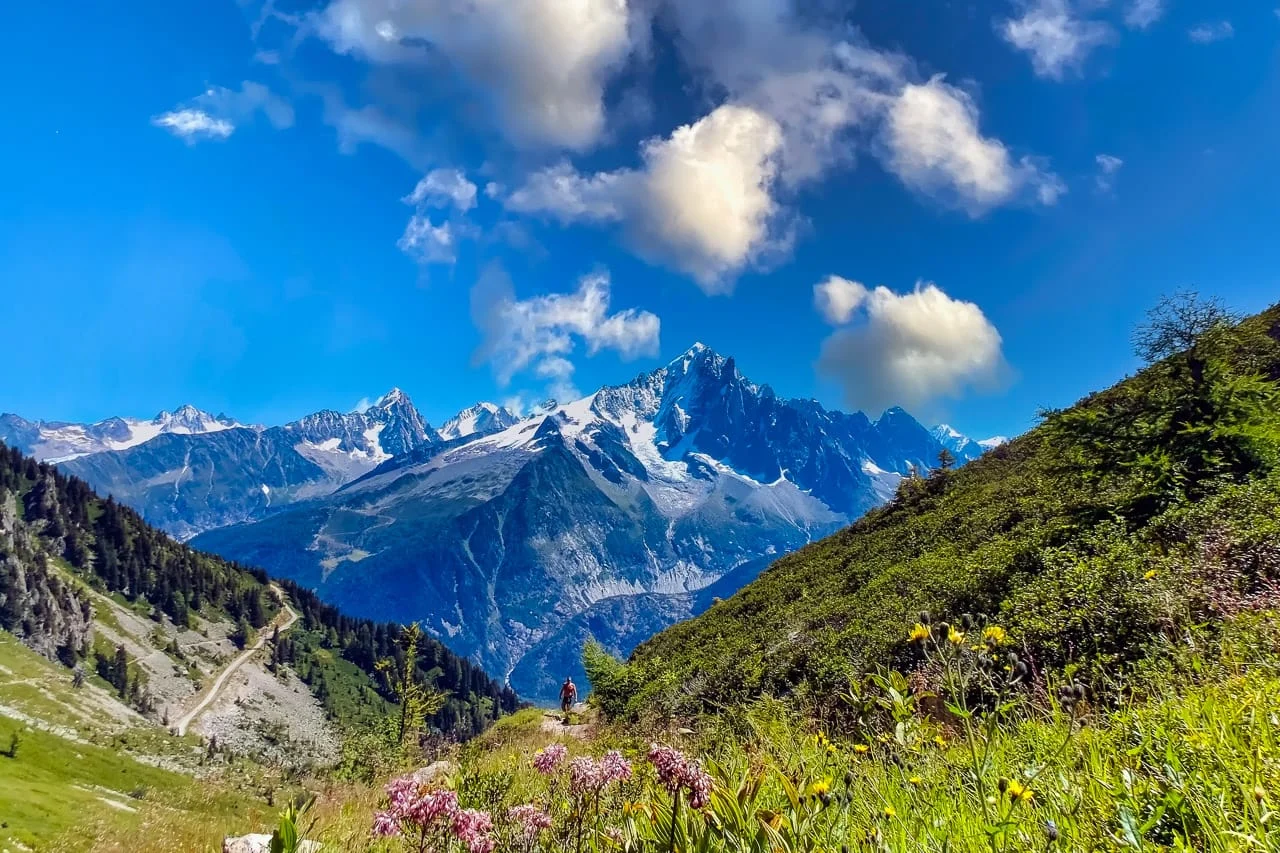
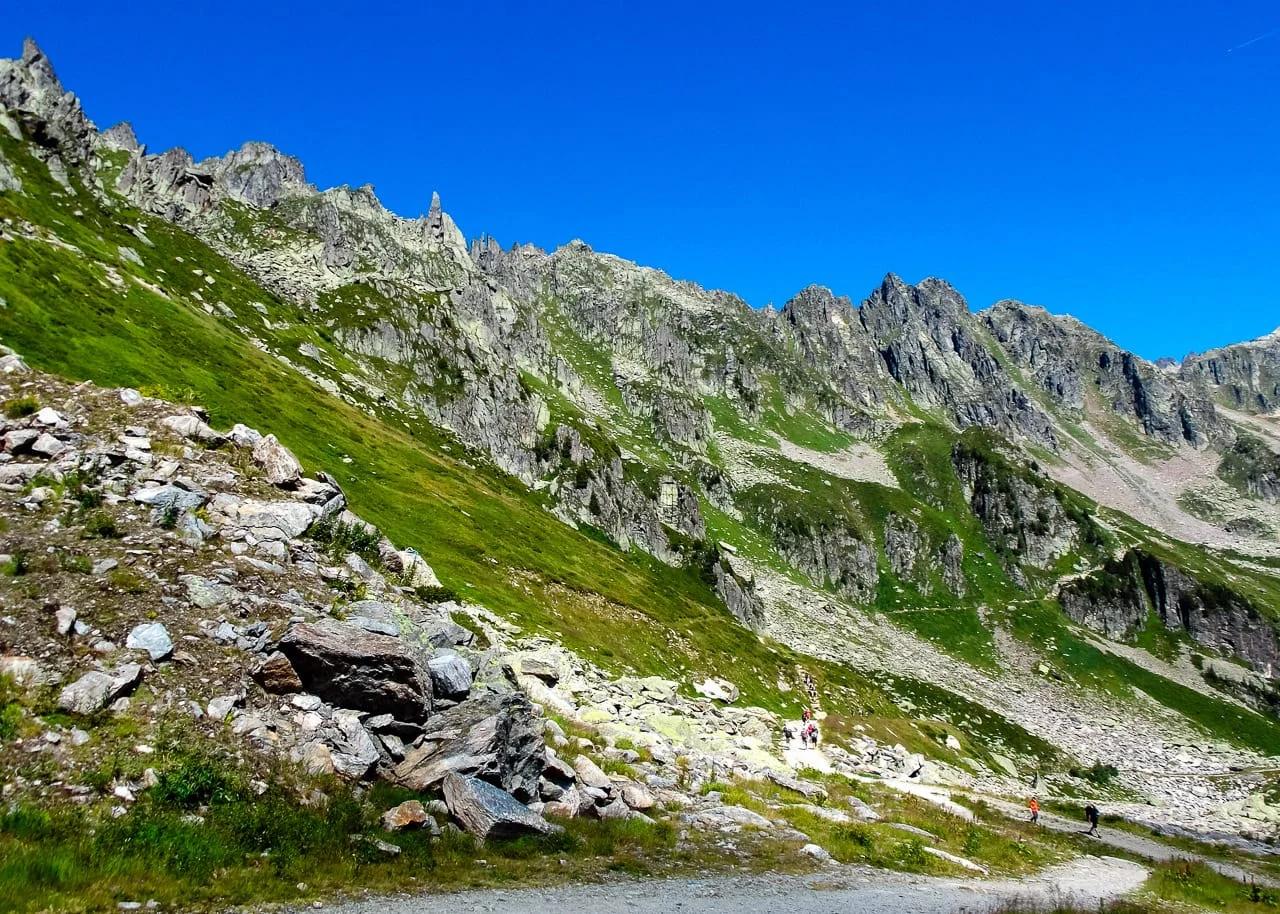
On the green slopes, paths connect the foreground with the mountains beyond. Small figures make the size of the terrain more legible without becoming the main subject.
Flowers and grass introduce detail close to the camera, while the distant ridges remain comparatively simple. That shift helps the eye move through the photograph.
Together, these images describe the Alps through contrasts: snow and vegetation, open slopes and enclosed woodland, still rock and flowing water.
Planning a visit to the French Alps
For a regional introduction, see France.fr’s official guide to the French Alps. Its Chamonix-Mont-Blanc visitor overview offers a more focused starting point for exploring that area.
Leave room in a photographic itinerary to observe how a place changes. A distant view and a nearby detail can tell different parts of the same story.
Explore more travel photography
Explore my Travel & Destinations collection for more photographs of landscapes, cities and cultural landmarks in Greece and around the world.