
From Arrival to Twilight: The Essential Photography Shot List for Hotels and Villas in Greece
A useful hotel or villa photography shot list follows the guest journey rather than treating the property as a collection of unrelated rooms.
It begins with arrival and exterior identity, moves through accommodation and shared spaces, and ends with landscape, sunset and blue-hour images. The sequence helps owners, hotel teams, architects, designers and photographers agree on what the final image library must communicate before production begins.
For properties in Greece, this planning is especially valuable. Strong sunlight, coastal views, white architecture, planted terraces and outdoor living spaces change character throughout the day. A clear plan protects the essential photographs while leaving enough flexibility to respond to weather, guest activity and the best available light.
A complete hospitality shot list answers six questions:
- How should the guest experience begin?
- Which rooms and amenities drive bookings?
- What distinguishes the property from competitors?
- Which views require specific light?
- Where will the images be used?
- Which scenes must be photographed at twilight?
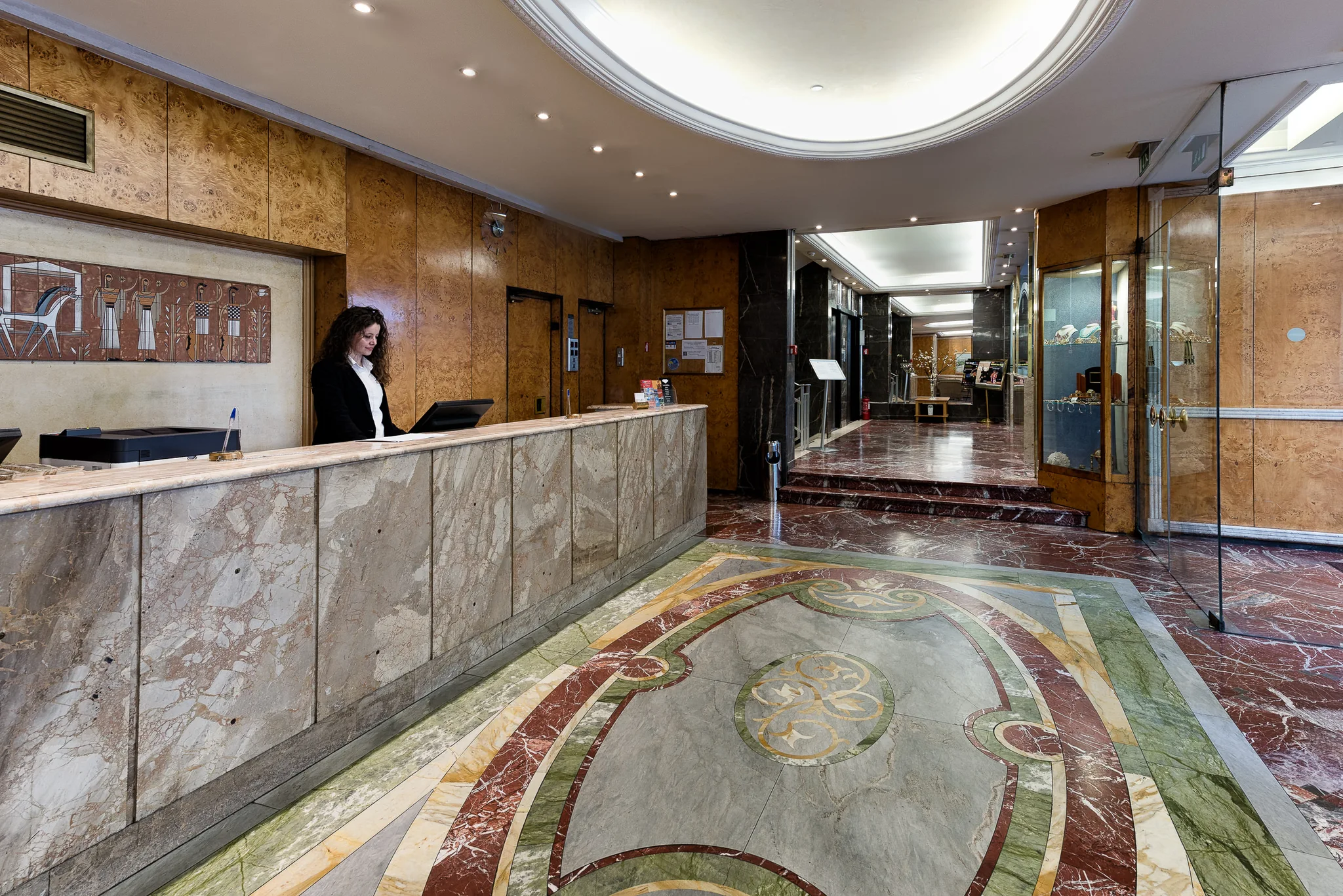
A sculptural stone counter introduces a warmly lit hotel arrival space.
In this planning guide
- Why hospitality shot lists should follow the guest journey
- Begin with audience, channels and property identity
- Arrival, approach and exterior identity
- Rooms, suites and private villas
- Shared spaces, dining and amenities
- Pools, landscape and destination context
- Plan the photographic day from morning to twilight
- Prepare the property, people and production
- Plan deliverables for every channel
- A practical hotel and villa photography shot list
- Questions clients ask before a hospitality photography shoot
- From a shot list to a coherent hospitality image library
Why hospitality shot lists should follow the guest journey
A hotel, resort or private villa is experienced as a sequence. Guests approach the property, recognise an entrance, enter reception or a living space, discover a room, move toward shared amenities and finally understand the relationship between architecture, landscape and destination. Photography is more persuasive when it preserves that sequence.
A conventional room-by-room checklist can confirm that every area was documented, but documentation alone does not create a coherent visual story. The photographer also needs to identify transitions: the view from entrance to lobby, the connection between bedroom and terrace, the route from restaurant to sea, or the way a pool aligns with the horizon. These relationships help a prospective guest imagine being there.
The shot list should therefore act as a hierarchy. Essential booking images come first, supporting atmosphere follows, and details complete the identity of the property. The approach works for hotels in Athens, island resorts, mainland retreats and independently managed villas across Greece because it begins with the experience rather than a fixed visual formula.
A decision guide, not a rigid script
A useful list gives the assignment direction without prescribing every frame. Light, weather, room availability and real activity can change during production. The photographer needs enough freedom to adjust the order and recognise stronger viewpoints while still protecting the agreed priorities.
Connect the list to business goals
Before listing spaces, define what the images must achieve. A new hotel launch, seasonal campaign, architecture publication, booking-platform refresh and property sale may require different emphasis. This question also determines whether the assignment needs broad horizontal banners, vertical social compositions, editorial details or a deeper architectural record.
Begin with audience, channels and property identity
The same property may need to communicate with several audiences: prospective guests, travel editors, tour operators, architects, interior designers, investors or award juries. Each audience looks for different evidence. Guests need to understand comfort, outlook and amenities. Editors need a distinctive story. Designers need materials, spatial decisions and details to remain visible.
List the priority audiences and channels before the photography date. Include the main website, booking engine, online travel agencies, press kits, brochures, social campaigns and any planned publication or award submission. This prevents a common problem: producing an attractive set that lacks the crops, orientations or supporting images required by a specific platform.
Define the visual promise
Write one short sentence describing the property promise. It might focus on quiet coastal living, contemporary urban hospitality, family privacy, culinary experience, wellness or architecture integrated with landscape. The sentence is not advertising copy for the photographs. It is a practical filter for deciding which scenes deserve time and which details are secondary.
Identify signature features
Note the elements that make the property recognisable: a stone reception counter, framed sea view, shaded courtyard, sculptural stair, mature garden, roof terrace or particular relationship between interior and pool. Signature features should appear more than once through a mix of establishing views, closer perspectives and details.
Arrival, approach and exterior identity
Arrival photography establishes location, scale and first impression. Begin with the route a guest actually follows: the road or path, property sign, entrance facade, doorway and reception point. These images should make the transition from destination to accommodation easy to understand.
For an urban hotel, surrounding streets and nearby landmarks can provide useful context. For an island villa or coastal resort, the relationship to terrain, sea and neighbouring landscape may carry more value. Context should support the property rather than reduce it to a distant object.
Exterior establishing views
Include a clear primary elevation, one angled view that explains volume and depth, and a wider scene showing the building in its setting. Photograph service or parking areas only when they are important to guest information or operations. The goal is a concise visual introduction, not exhaustive site documentation.
Entrance and reception
Reception is both a functional point and an emotional threshold. A wide frame explains the space; a medium view shows desk, seating and circulation; details can record lighting, materials, signage and welcome elements. If staff presence supports the brand, plan a second version with natural interaction.
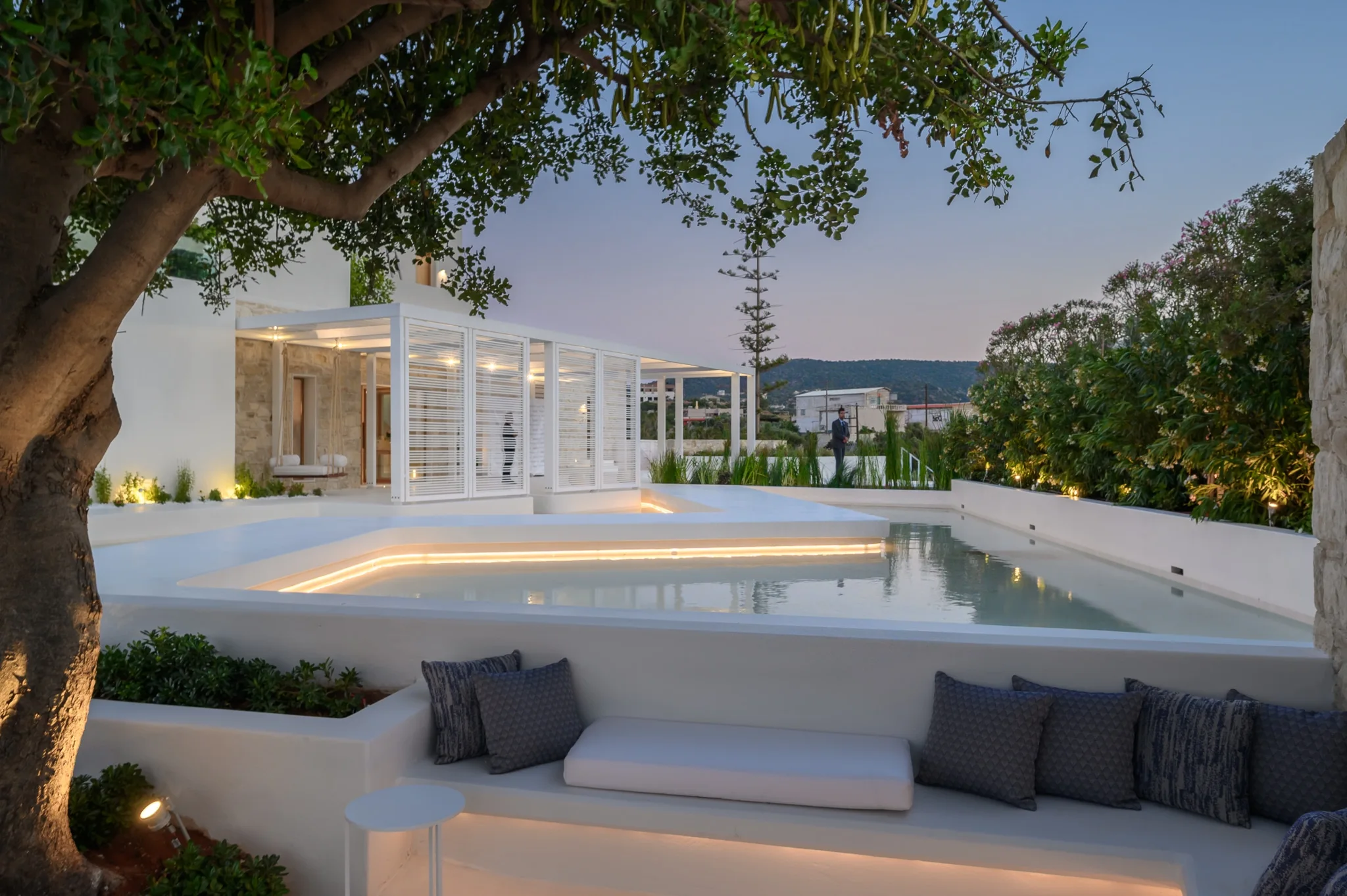
Built-in seating, white surfaces and mature planting shape a quiet outdoor guest space.
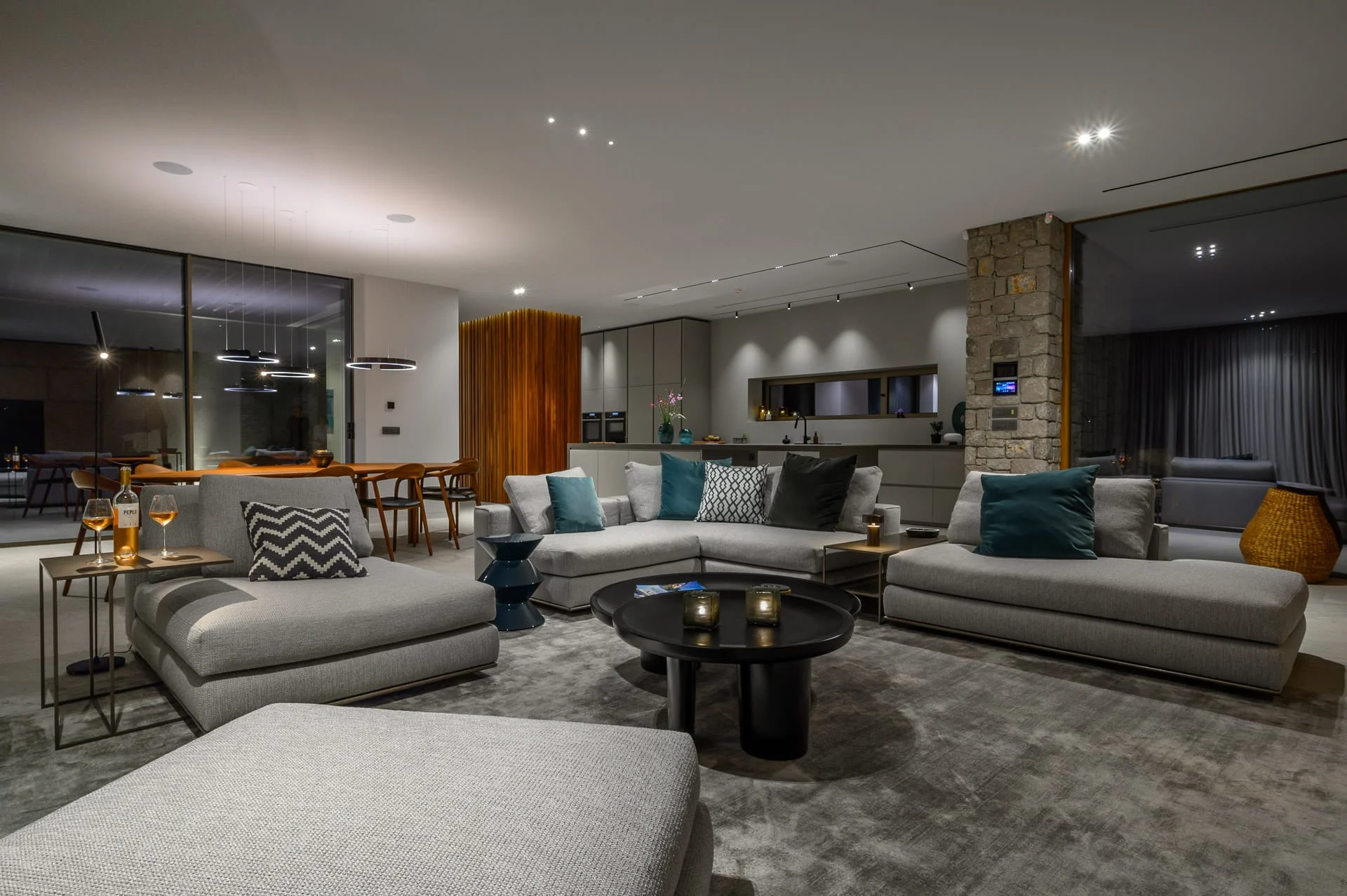
A broad interior view explains the lounge, furnishings and relationship to adjacent space.
Rooms, suites and private villas
Accommodation photographs must show more than furniture. They should explain proportion, circulation, outlook and the relationship between sleeping, bathing, living and outdoor areas. Begin with the strongest position that describes the whole room, then make supporting views that clarify important features without repeating the same information.
Establish space and flow
For hotel rooms, photograph the principal room category and every meaningful variation in size, view, terrace, bathroom or accessibility. For a private villa, treat connected living areas as a sequence. Doorways, open partitions and aligned views can show how spaces relate while maintaining clean geometry.
Beds, bathrooms and amenities
Prepare linen, towels, curtains, cushions and bedside surfaces before the camera arrives. Include one clear bathroom overview where possible, then details of distinctive fittings or materials. Photograph in-room amenities when they influence booking decisions, but avoid turning the complete set into a catalogue of generic objects.
Protect the view
Windows and terraces often carry the strongest sense of place. Plan a frame that balances interior brightness with the exterior view, plus a second image from the threshold or terrace. The correct time depends on orientation, reflections and how strongly the exterior must register.
Shared spaces, dining and amenities
Shared spaces explain how the property is lived in beyond the room. Prioritise the areas most connected to the guest promise: lobby and lounge, restaurant, breakfast room, bar, wellness spaces, gym, conference rooms, family facilities or quiet working areas. Each space needs one establishing image and only enough supporting frames to communicate its specific character.
Restaurants, bars and breakfast areas
Dining photography should clarify layout, atmosphere and connection to view or landscape. Tables must be aligned and service elements intentional. If food is part of the commission, coordinate preparation so interior views are completed before dishes and staff activity change the room. Empty and lightly occupied versions can serve different marketing uses.
Terraces and outdoor living
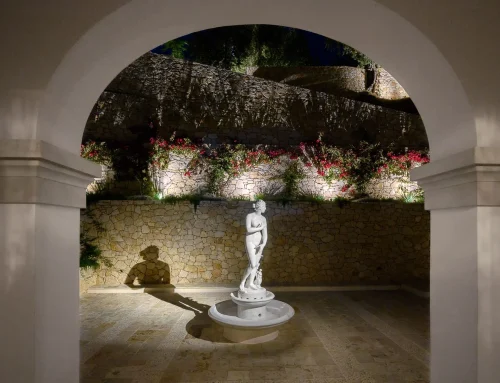
Outdoor seating, shaded dining, fire areas and courtyards are often central to hospitality in Greece. Photograph how shade, planting and architecture create comfort, then add closer frames of materials and details. Avoid photographing every chair from multiple directions unless the furniture itself is part of the design story.
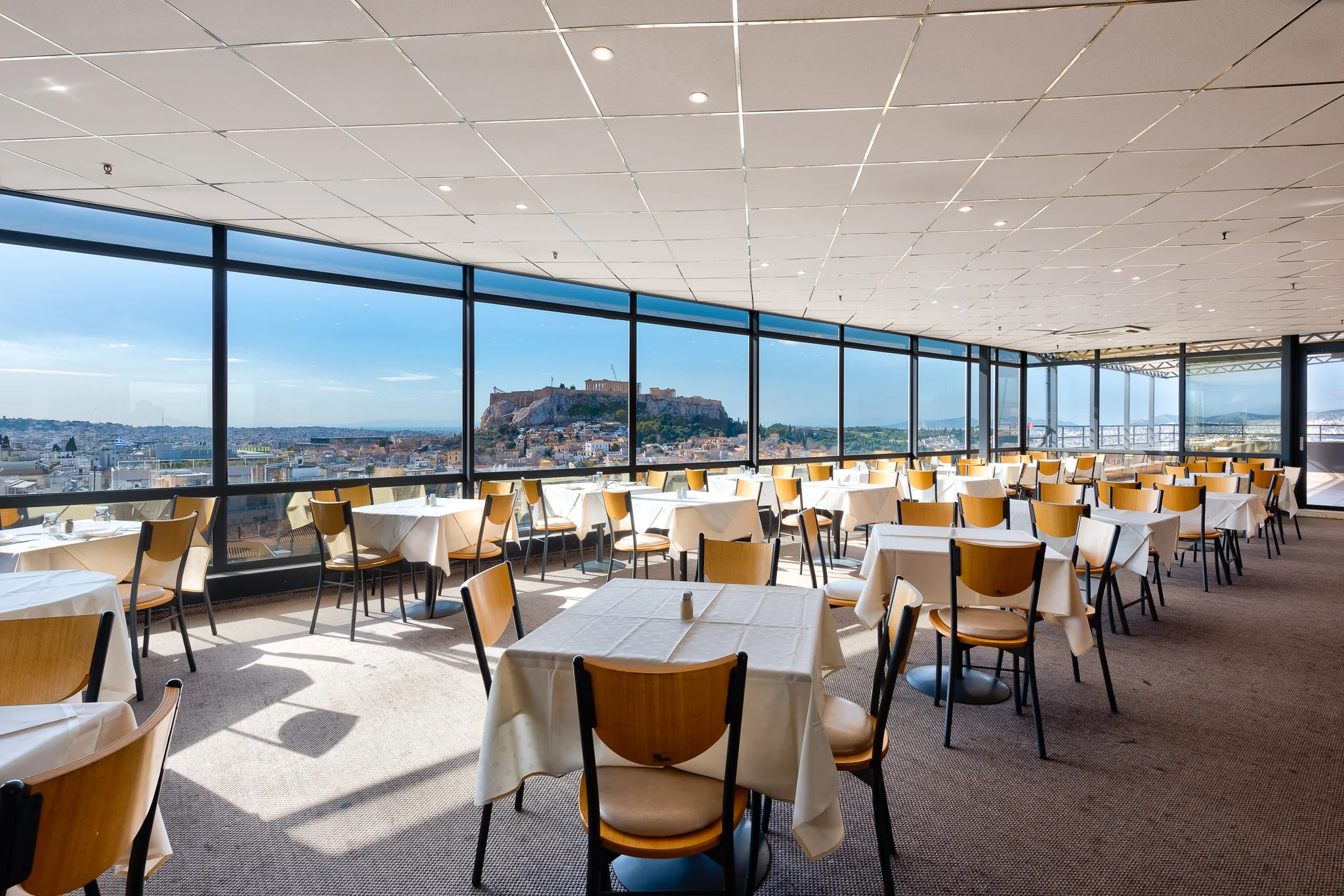
Ordered tables and broad glazing connect the dining experience with the coastal setting.
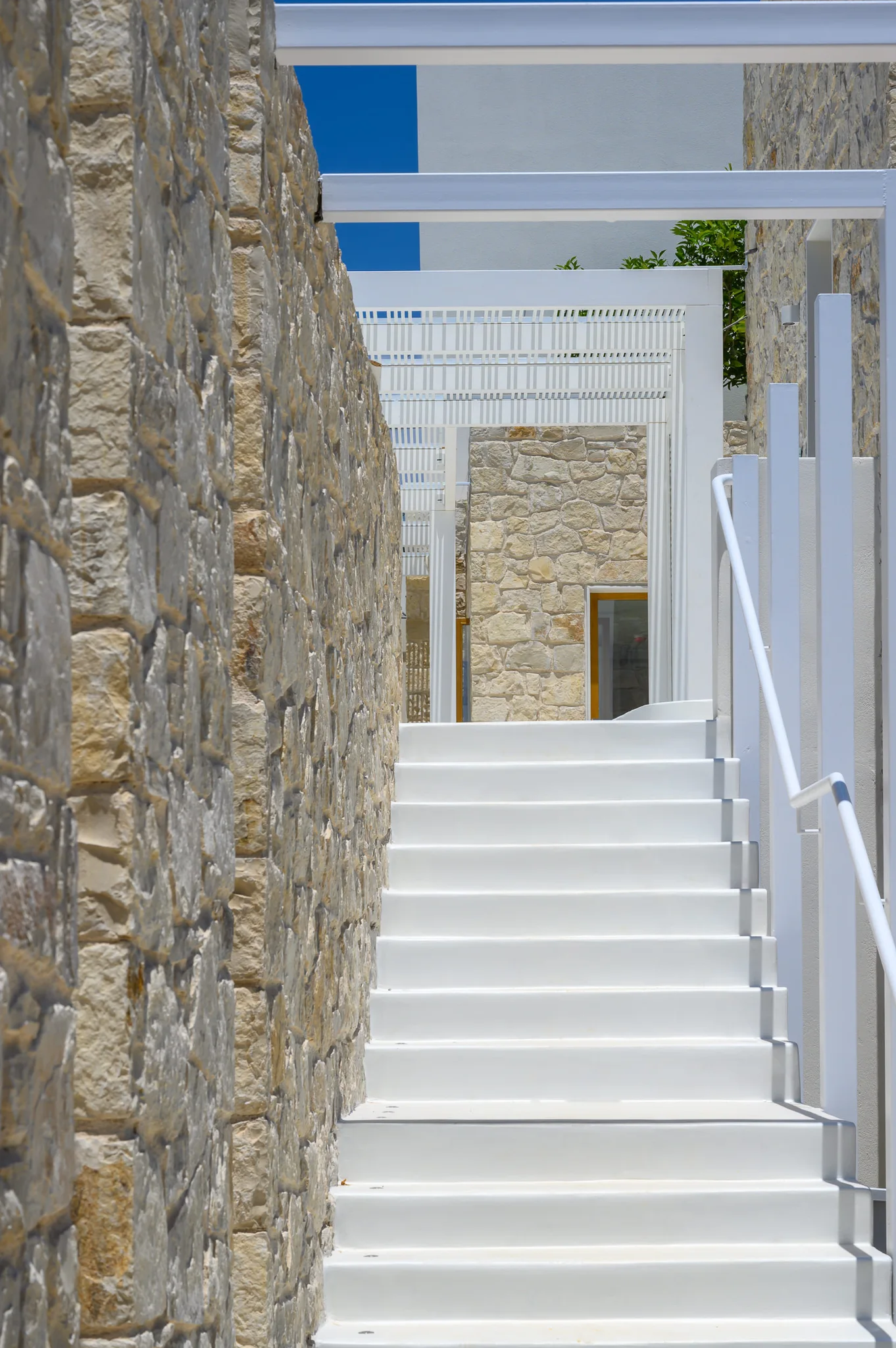
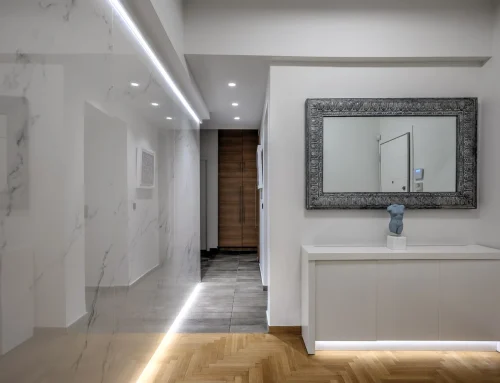
A quiet stairway, white walls and controlled shadows extend the hospitality story beyond the principal rooms.
Pools, landscape and destination context
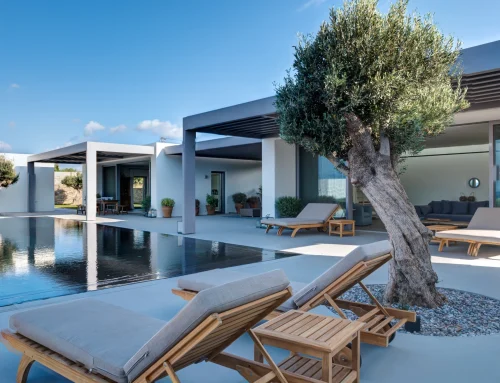
Pools and gardens often connect the accommodation to its destination. A pool image should show shape, access, adjacent seating and the view beyond, not only blue water. Landscape frames can explain privacy, mature planting, paths and the transition between built and natural areas.
Ground-level experience
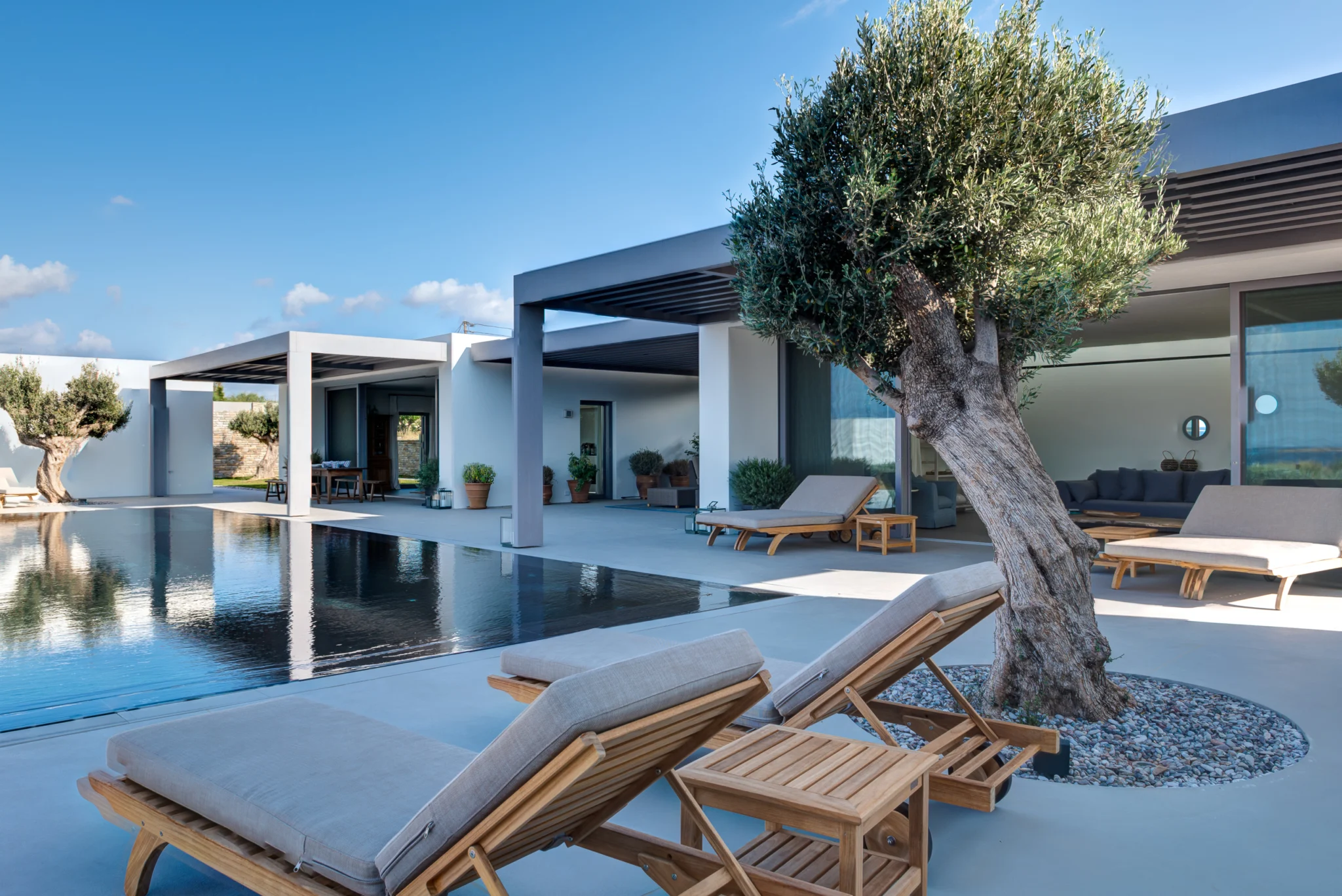
Work first from guest height. Include the approach to the pool, a clear relationship between water and architecture, and one quieter image describing loungers, shade or planting. Details such as stone edges, steps and reflections are useful when they reinforce the design rather than merely fill the gallery.
When aerial coverage adds value
Aerial photography can explain site organisation, proximity to coastline, garden structure, roof terraces and the relationship between multiple buildings. It is most useful when a ground-level frame cannot communicate those relationships. Aerial coverage should complement the story rather than replace well-composed architectural and hospitality photographs from the ground.
For projects where context is essential, the landscape and aerial photography service can be planned alongside interior and exterior coverage as one coordinated assignment.
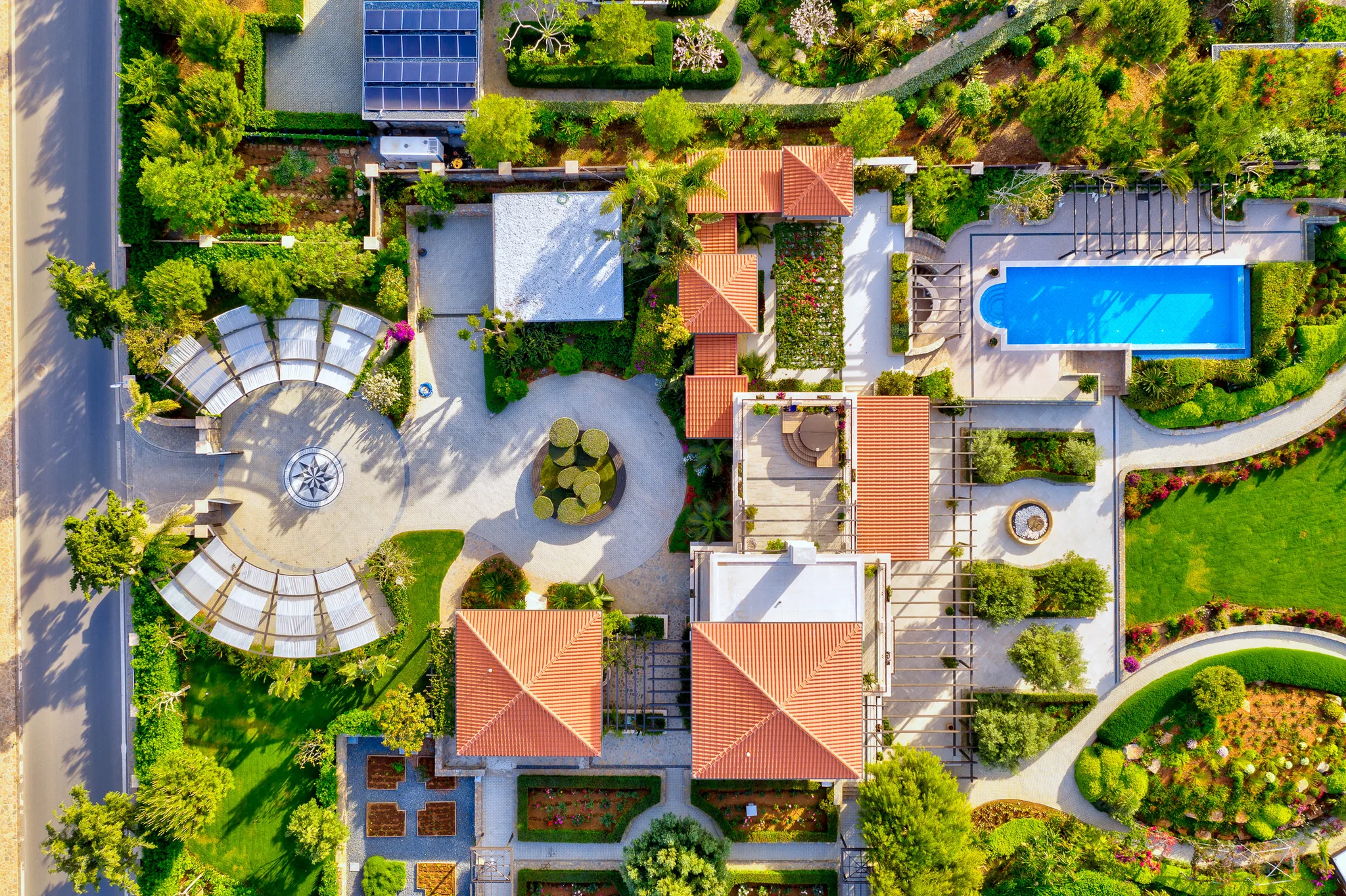
Curving paths and dense planting reveal the relationship between buildings, garden and pool.
Plan the photographic day from morning to twilight
A complete shot list should be arranged by light and access, not simply by room number. Record the orientation of important exteriors, windows, terraces and views. Identify which spaces are available only at certain times, when housekeeping can finish, and whether guest circulation will limit production.
Morning and midday
Morning often suits east-facing rooms, breakfast areas and quiet exterior scenes. Midday can work for bright pool and coastal imagery when the visual intention is crisp and summery, although reflective interiors may need a different schedule. Use the strongest daylight for high-priority spaces rather than photographing in administrative order.
Golden hour
Late light can give texture to facades, landscape and outdoor living areas. Decide in advance which two or three scenes deserve the limited golden-hour window. Trying to photograph every exterior at once usually produces rushed compositions and missed transitions.
Blue hour and night
Twilight brings interior lighting, pools and exterior architecture into balance. Prepare lighting scenes before sunset, test every fixture and remove temporary work lights. The most useful blue-hour shot normally combines a clear architectural subject with an inviting interior or outdoor atmosphere. Night views can follow, but they should add something distinct rather than repeat the same composition after the sky turns black.
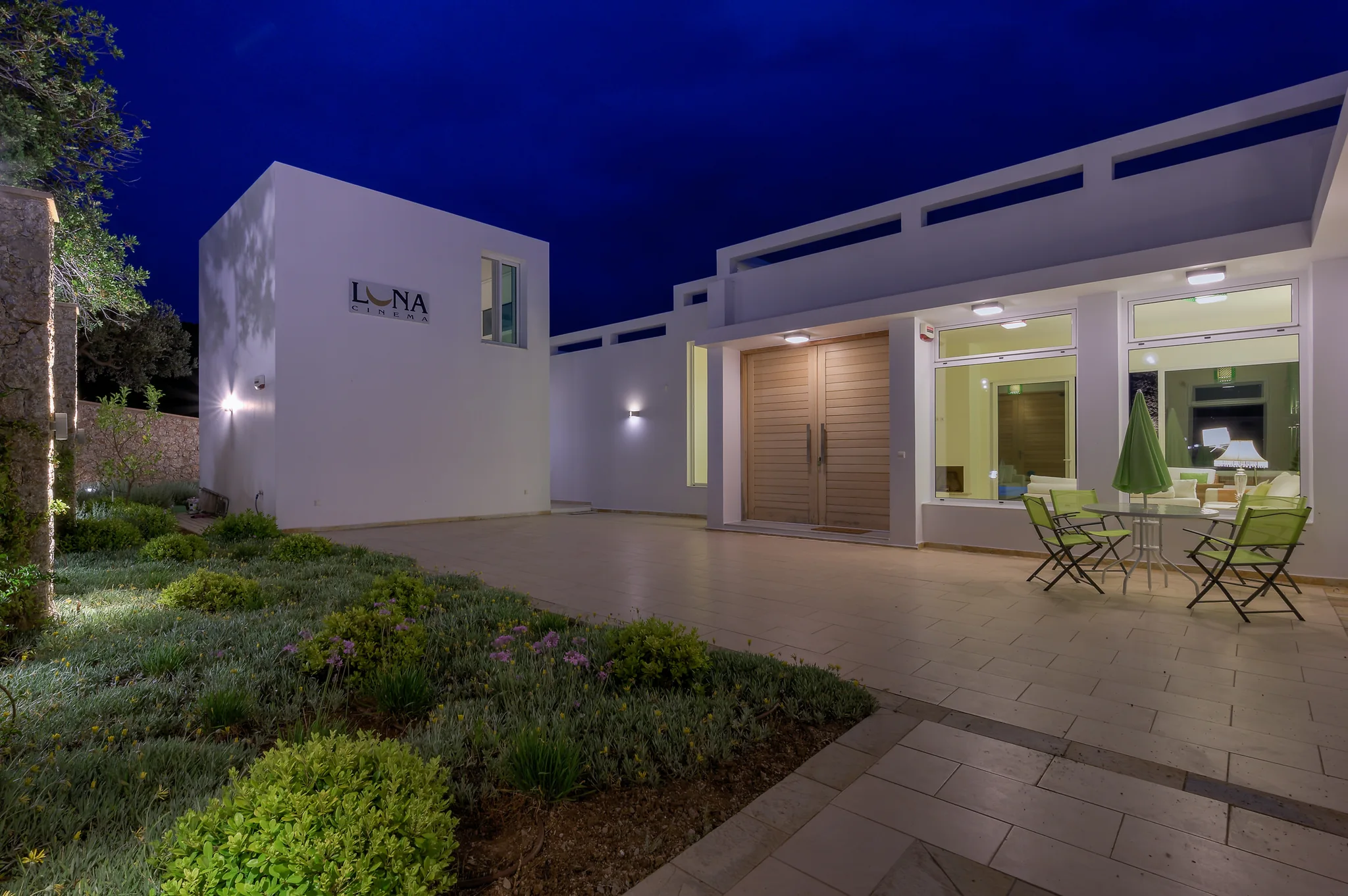
A still pool, illuminated interiors and deep evening colour create the closing chapter of the visual sequence.
Prepare the property, people and production
The best shot list cannot compensate for rooms that are unavailable, incomplete or inconsistently styled. Assign one person to coordinate decisions on the day and confirm that every priority space is clean, operational and accessible. Share floor plans, room lists, orientation information and any temporary restrictions before production.
Styling and readiness
Remove maintenance equipment, packaging, excessive signage and personal items that do not belong to the intended guest experience. Check bulbs and colour temperatures, straighten furniture and prepare outdoor cushions shortly before they are photographed. Styling should feel credible for the property, not overfilled for the camera.
Staff, guests and models
Decide whether the image library needs empty architectural views, staff interaction, lifestyle scenes or a combination. If people appear, plan permissions, wardrobe, roles and timing. Empty scenes remain useful for design, press and long-term flexibility, while carefully directed activity can add scale and hospitality.
Access and contingency planning
Confirm keys, lifts, roof access, pool readiness, parking and any drone or coastal considerations relevant to the site. Identify a weather alternative and a clear priority order in case the schedule changes. A short production call before the shoot can resolve these details more efficiently than a long message thread on the day.
Plan deliverables for every channel
A hospitality image library needs enough variety to work across wide website headers, room pages, booking platforms, press releases, brochures and vertical social formats. List required orientations and crops next to each priority scene. This does not mean making every composition twice, but it does prevent important spaces from existing in only one unusable format.
Wide, vertical and detail coverage
Wide frames establish place and space. Vertical compositions support mobile campaigns, magazines and architectural details. Medium views and close details add rhythm. A balanced final selection should move between these scales without losing the property narrative.
Selection and delivery
Agree on approximate image quantity, client selection process, retouching level, file formats, colour space and delivery date. Clarify whether the photographer or client makes the first edit. A disciplined selection usually communicates the property more strongly than an oversized gallery of near-duplicates.
Usage and licensing
List the organisations that will use the images and the planned channels, territories and duration. Hotel ownership, operators, architects, designers, agencies and publications may have different requirements. Defining usage before production keeps the commission clear and supports future licensing when new partners request access.
A practical hotel and villa photography shot list
Use this as a planning framework, then remove anything that does not serve the property.
Arrival and identity
- Destination or neighbourhood context
- Approach, sign and primary entrance
- Main facade and architectural establishing view
- Reception, welcome point and circulation
Accommodation
- Principal room and suite categories
- Living, sleeping and bathroom relationships
- Terraces, balconies and significant views
- Distinctive amenities, materials and details
Shared guest experience
- Lobby, lounge and circulation spaces
- Restaurant, breakfast area and bar
- Wellness, gym, conference or family facilities
- Outdoor dining, courtyards and shaded seating
Pool, landscape and destination
- Pool in relation to architecture and outlook
- Gardens, paths and outdoor living
- Ground-level destination context
- Aerial overview when it adds useful spatial information
Time and atmosphere
- Priority morning or afternoon interiors
- Golden-hour facade, terrace or landscape
- Blue-hour pool and illuminated architecture
- Selected night atmosphere or staff activity
Delivery
- Horizontal, vertical and banner requirements
- Website, booking, editorial and campaign uses
- Selection, retouching and delivery schedule
- Participating stakeholders and licensing
Questions clients ask before a hospitality photography shoot
How many photographs does a hotel or villa need?
The number depends on property size, room categories, amenities, intended channels and how many seasonal or twilight scenes are required. Begin by listing decisions a guest must make, then build the essential image set around them. Supporting atmosphere and details can be added once every important space and relationship is covered.
How long does the photography take?
A compact villa may be covered in one carefully scheduled day, while a hotel with multiple room types, dining, wellness, staff activity and twilight scenes may require more time. Styling, access and travel between spaces matter as much as square metres. The final schedule should be built from priority scenes and light windows.
Should the property be empty?
Priority rooms and shared spaces should be controlled during their photography window. The entire property does not always need to close. A coordinated schedule can move production around housekeeping, operations and guests, provided access and readiness are confirmed in advance.
Are people necessary in hospitality photographs?
Not in every image. Empty architectural photographs clearly show space and design, while selected staff or lifestyle scenes can communicate service, scale and atmosphere. Plan both where useful rather than allowing unplanned people to appear inconsistently across the set.
Is aerial photography always necessary?
No. It adds value when the property relationship to coastline, landscape, gardens, roofs or multiple buildings cannot be understood from the ground. For a compact urban hotel or strongly interior-led assignment, ground photography may communicate the project more effectively.
When should twilight photography be scheduled?
Schedule it after the principal daylight coverage and prepare all relevant lighting before sunset. Select the most important exterior, pool or terrace compositions in advance because the useful balance between sky and artificial light is brief.
From a shot list to a coherent hospitality image library
A strong shot list protects the essentials without making the photography mechanical. It connects property identity, guest experience, architecture, landscape and commercial use in one practical production plan.
For assignments in Athens, the Greek islands and destinations across Greece, commercial photography, interior photography, residential photography and aerial coverage can be planned as one coherent visual commission. You can also review selected projects or explore the complete photography services.