
Photographing the Character of Hotels and Villas in Greece

A hotel or villa photograph needs to do more than show an attractive space. It should help a prospective guest understand what distinguishes the property: its architecture, the atmosphere of its interiors and its relationship with the surrounding landscape.
For owners and hospitality teams, the challenge is to communicate those qualities clearly while keeping the photographs faithful to the place. A strong collection combines an inviting first impression with enough information to make the spaces understandable.
Begin with the property’s own character
There is no single visual style that suits every hospitality property in Greece. A restored stone residence and a contemporary coastal villa call for different photographic choices.
The starting point is what the architecture offers. Deep window reveals, shaded courtyards, exposed materials or an open terrace may each shape the experience of a stay. Photographs become more distinctive when those features guide the composition, rather than being treated as background decoration.
Details are most useful when they contribute to that understanding. A close view of stonework or timber can describe texture and craftsmanship; a wider photograph shows where that material belongs within the space.
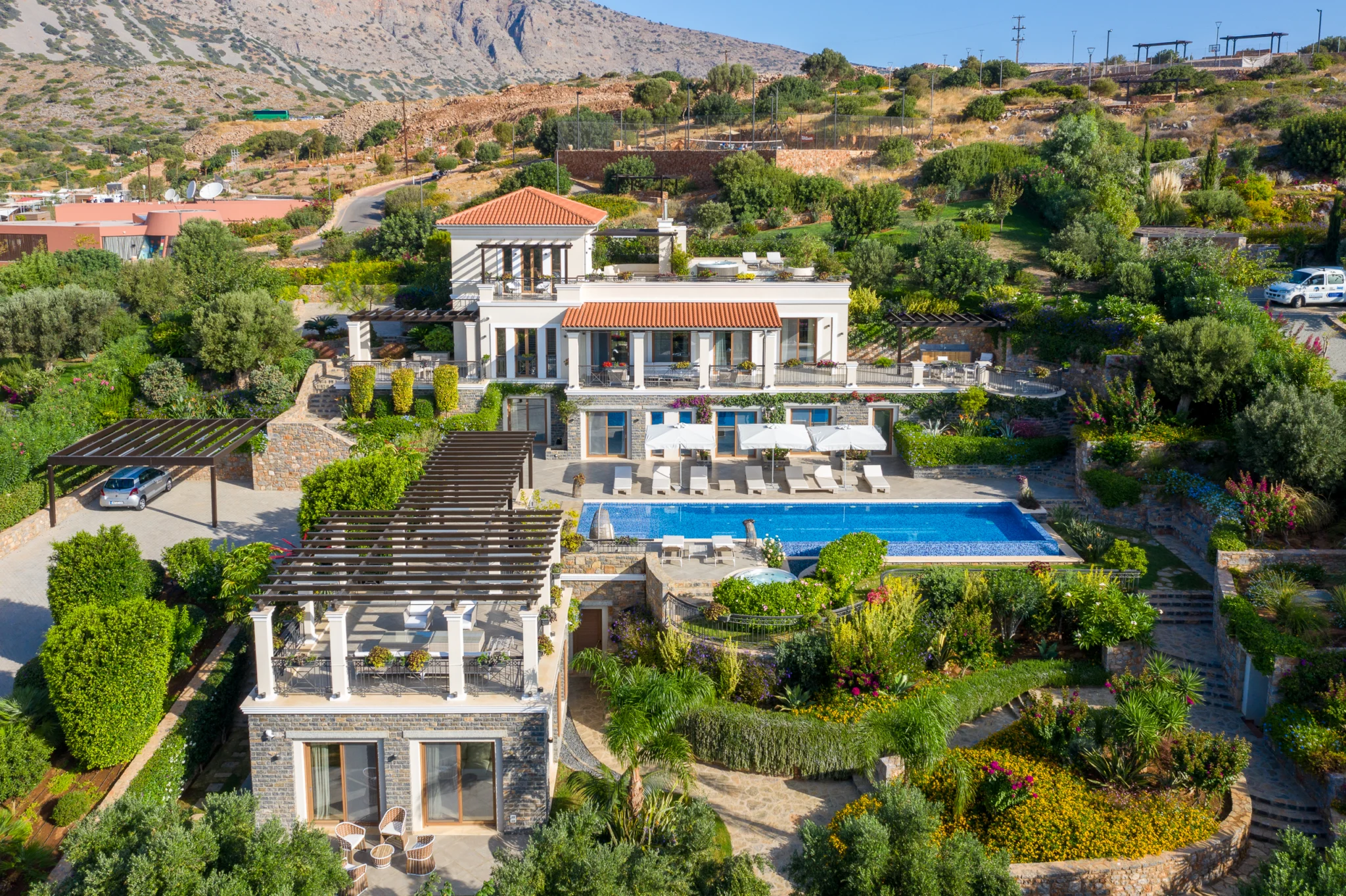
Show how the building sits within its setting
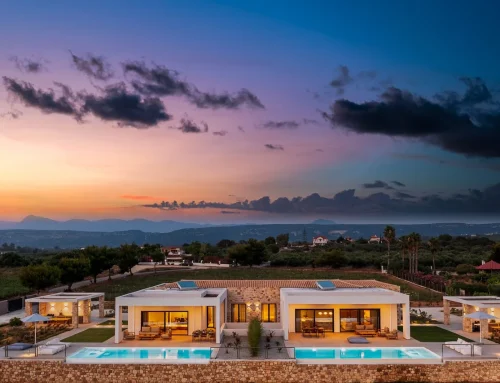
The elevated villa photograph accompanying this article brings the building, pool, terraces and gardens into one frame. It explains their arrangement in a way that separate detail photographs cannot.
That wider context gives the viewer a starting point. Ground-level views can then describe the scale of a terrace, the shade beneath a pergola or the relationship between seating and the pool.
The Mirum Villas photographic series explores these connections through architectural, interior and aerial views. Each perspective contributes a different kind of information.
Use light to reveal the space
Light affects how materials, proportions and depth appear in a photograph. Direct sunlight can define the edges of a façade, while reflected light may reveal the texture of a shaded wall more gently.
Interiors require particular care when a bright exterior is visible through a window or doorway. The photograph should retain a believable relationship between the room and the view, so neither becomes disconnected from the other.
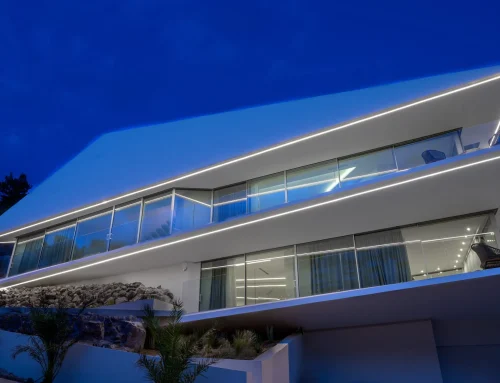
Evening photographs can show how lighting changes the character of a terrace or shared space. They add another reading of the property, alongside daylight views that explain its form and setting.
Keep atmosphere and accuracy together
An inviting photograph should still give a credible impression of the space. Viewpoint, perspective and framing influence how large a room appears and how its different areas relate to one another.
A very wide composition may include everything while making those relationships less convincing. A more considered viewpoint can communicate proportion, circulation and depth without exaggeration.
The same principle applies to colour and editing. Materials should remain recognisable, and the collection should feel consistent as the viewer moves between interiors, outdoor spaces and different times of day.
Give the collection a clear purpose
A website introduction, a room listing and an architectural feature may need different photographs. An opening image can establish atmosphere; supporting views explain the accommodation, shared spaces and details that matter to the intended audience.
The aim is a collection in which each photograph has a role. Together, the images should make the property easier to understand and give its individual character room to emerge.
For practical preparation, my hotel and villa photography shot-list guide explains how to translate those priorities into a photographic brief.