
Photographing Indoor–Outdoor Living in Luxury Villas

A villa’s character often lies in the relationship between its interiors and the spaces beyond them: a living room opening onto a shaded terrace, a bedroom overlooking a garden, or a pool aligned with the surrounding landscape.
Photographing these connections helps explain both the architecture and the experience of staying there. For owners, managers and designers, the aim is a set of images that makes the property understandable while preserving its atmosphere.


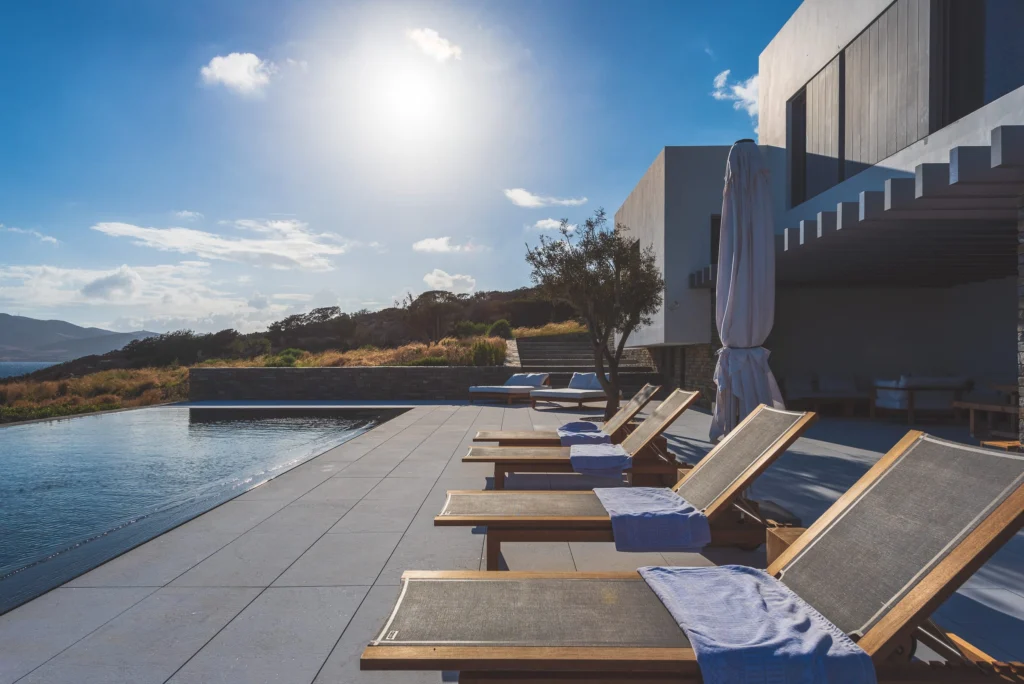
Show how the spaces connect
Separate photographs of a lounge, terrace and pool can describe each area without explaining how they relate. A carefully chosen view through an open doorway can bring those spaces together.
The camera position matters. Including a threshold, part of the interior and the outlook beyond gives the viewer a sense of movement through the property. A supporting photograph from the terrace can then reveal the relationship from the opposite direction.
The widest possible view is not always the most useful. Furniture, doorways and circulation should retain believable proportions, with controlled perspective and enough space around important architectural features.
Let light explain comfort and design
Sunlight and shade influence how outdoor living spaces are perceived. A shaded dining area beneath a pergola communicates something different from an open sun terrace, even when both overlook the same pool.
The timing should suit the space. Low light may reveal the texture of stone or the depth of a façade, while a brighter scene can describe the relationship between water, planting and architecture. Interiors require particular care when a sunlit exterior is visible through glass: both the room and its outlook need to remain readable.
A consistent series does not require identical lighting in every photograph. It requires a considered balance that allows the property’s character to remain recognisable throughout.
Keep materials and details in context
Stone, timber, plaster and textiles contribute to the identity of a villa. Their value in a photograph comes from showing how they belong to the design.
A closer view of a stone wall meeting a terrace, or a timber screen filtering daylight, can explain more than an isolated decorative object. These details give the wider photographs depth and help architects and interior designers communicate their decisions.
Colour should remain credible. Warm interiors, blue water and green planting can retain their richness without exaggerated saturation.
Describe the setting honestly
Ground-level photographs show the outlook a guest or resident will actually experience. They can explain the relationship between seating, shade, planting and the view beyond.
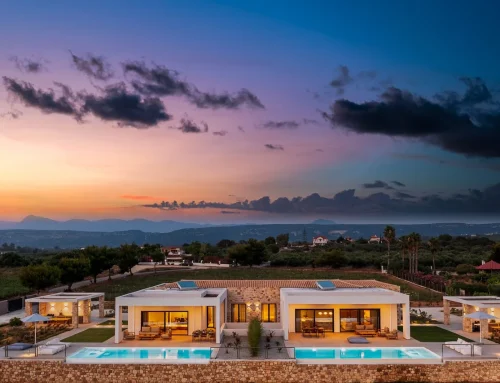
An aerial photograph can complement this perspective when it clarifies the arrangement of buildings, gardens and outdoor spaces. It serves a different purpose from a photograph made at terrace level; a balanced selection may need both.
The framing should make the setting clear without implying greater seclusion, proximity to the sea or room size than the property offers.
Choose images for their intended use
For a villa’s website, connected views can help prospective guests understand the layout and how they might spend time there. An architectural portfolio may place greater emphasis on thresholds, materials and the relationship between built form and landscape.
Agreeing on those priorities helps each photograph earn its place in the final selection. For a broader production checklist, see my hotel and villa photography shot-list guide.
If you are commissioning photography for a villa or private residence in Greece, explore my residential photography service. Share the property’s location, its distinctive features and where the images will be used so I can prepare a bespoke quotation.
For owners and managers who prefer Greek, my villa and residential photography services in Greek explain the approach to commissioning a photographic series.